Table Of Content
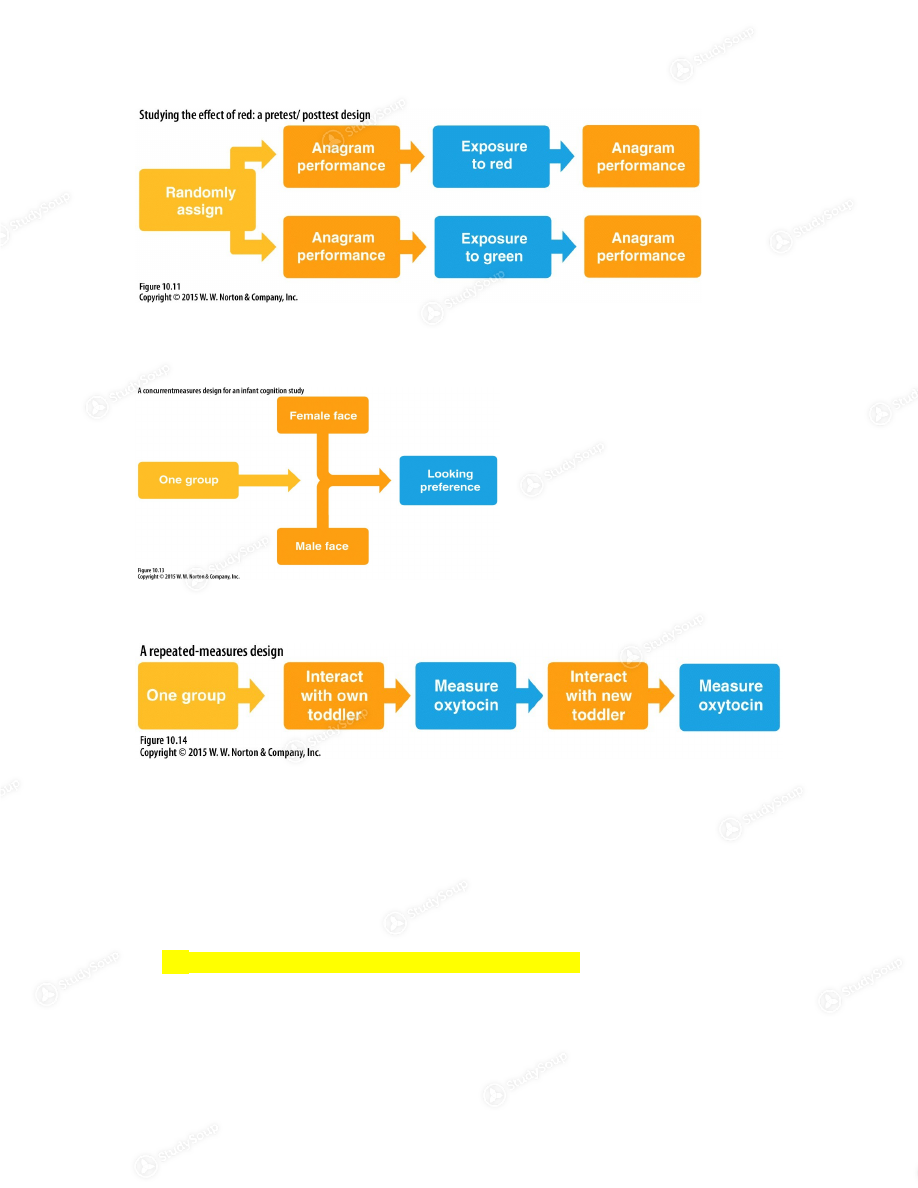
As part of our study of social environment, loneliness, and health in the aging process, we developed an HRS module that included a short loneliness scale. Our module was assigned to 3,008 potential respondents, double the number assigned to the other eleven 2002 modules. Independent measures design, also known as between-groups, is an experimental design where different participants are used in each condition of the independent variable. This means that each condition of the experiment includes a different group of participants. Experimental design refers to how participants are allocated to different groups in an experiment.

About the Program
By merging both scores of quality and quantity, with qualitative data from interviews, the authors illuminated the difficulty of achieving highly on both PCMH quality measures and productivity. The authors extended this understanding further by merging staff satisfaction scores and staff interview data to illustrate the greater work complexity but lower satisfaction for staff achieving measures for high-quality care (Tomoaia-Cortisel et al. 2013). It is surprising that there is no single consensus definition of multiple baseline designs. Concurrent multiple baseline designs are multiple baseline designs in which the tiers are synchronized in real time. By synchronized we mean that “session 1” in all tiers takes place before “session 2” in any tier, and this ordinal invariance of session number across tiers is true for all sessions.
A DSM-5-based tool to monitor concurrent mood and premenstrual symptoms: the McMaster Premenstrual and Mood ... - BioMed Central
A DSM-5-based tool to monitor concurrent mood and premenstrual symptoms: the McMaster Premenstrual and Mood ....
Posted: Wed, 30 Mar 2022 07:00:00 GMT [source]
Independent Measures
In addition to the philosophical challenges involved in integrative research, reconciling different data collection modalities and analytic techniques presents a formidable barrier. We have shown how one of these practical challenges, developing measures that are robust to different data collection modalities, can be surmounted. Our study also provides the first population-level confirmation of an association between social ties and loneliness. We predicted this association based on the extant research indicating that as objective social isolation increases, intimate and social needs are less likely to be met adequately. In a semistructured interview of single, married, divorced, and widowed individuals 25 to 75 years of age, de Jong-Gierveld (1987) reported that living with a partner predicted the lowest levels of loneliness.
Extraneous variables (EV)
Further, it is impossible to know how many events, which events, or the severity of the events that are missed by an across-tier comparison. A researcher who puts great confidence in the across-tier comparison could falsely reject the idea that coincidental events were the cause of observed effects. In this section, we examine how within- and across-tier comparisons may support (or fail to support), internal validity in concurrent and nonconcurrent multiple baseline designs.
Thus, a multiple baseline with phase changes sufficiently lagged (in terms of number of sessions) provides rigorous control for this threat. In an exploratory sequential design, the researcher first collects and analyzes qualitative data, and these findings inform subsequent quantitative data collection (Onwuegbuzie, Bustamante, and Nelson 2010). For example, Wallace and colleagues conducted semistructured interviews with medical students, residents, and faculty about computing devices in medical education and used the qualitative data to identify key concepts subsequently measured in an online survey (Wallace, Clark, and White 2012).
Graduate Professional Development Program (GPD)
Different purposes of mixing ultimately differ in the way one component relates to, and depends upon, the other component. For example, these purposes include dependencies, such as “x illustrates y” and “x explains y”. Dependencies in the implementation of x and y occur to the extent that the design of y depends on the results of x (sequentiality).

Extending the definition by Guest (2013), we define the point of integration as “any point in a study where two or more research components are mixed or connected in some way”. Then, the point of integration in the two examples of this paragraph can be defined more accurately as “instrument development”, and “development of the sample”. At some point in writing down the results of the first component, the results of the second component are added and integrated. A joint display (listing the qualitative and quantitative findings and an integrative statement) might be used to facilitate this process.
Point of integration
That is, will the study have an inductive or a deductive drive, or, we added, a combination of these. Related to this idea is whether one will conduct a qualitatively driven, a quantitatively driven, or an equal-status mixed methods study. This language is sometimes included in the design name to communicate this characteristic of the study design (e. g., a “quantitatively driven sequential mixed methods design”). First, we showed that there are there are many purposes for which qualitative and quantitative methods, methodologies, and paradigms can be mixed. Inclusion of a purpose in the design name can sometimes provide readers with useful information about the study design, as in, e.
About this article
The benefit of using an exploratory sequential design in the study by Jafer et al.,27 is that it allowed for an in-depth exploration of the dental patients’ thoughts, opinions, and needs for oral cancer information, and dentists’ behaviour regarding the prevention and examination of oral cancer. By using qualitative methods to explore the emerging patterns in the patients’ views and needs, the researchers were able to identify key themes and issues that would have been missed in a purely quantitative study. The subsequent quantitative study, which involved a larger sample of dental patients, allowed the researchers to test and confirm their findings from the qualitative study in a more representative sample.
The second part discusses about qualitative and quantitative data collection methods. The purpose of this section is to indicate how the research was conducted throughout the study periods. Integration through connecting occurs when one type of data links with the other through the sampling frame. The interview participants are selected from the population of participants who responded to the survey. Connecting can occur through sampling regardless of whether the design is explanatory sequential or convergent.
Qualitative methodologies are applied to research questions to explore why or how a phenomenon occurs, to develop a theory, or to describe the nature of an individual's experience. Mixed methods research studies draw upon the strengths of both quantitative and qualitative approaches and provides an innovative approach for addressing contemporary issues in health services. The concurrent multiple baseline design opened up many new opportunities to conduct applied research in contexts that were not amenable to other SCDs. However, researchers in clinical, educational, and other applied settings recognized that they could expand research much further if the tiers of a multiple baseline could be conducted as they became available sequentially rather than simultaneously. Two articles published in 1981 described and advocated the use of nonconcurrent multiple baseline designs (Hayes, 1981; Watson & Workman, 1981).
Regarding the fit of the quantitative and qualitative data, the integration resulted in an expansion of understanding. The qualitative comments provided information about the spectrum of opinions about ethical advantages and disadvantages, but the scales in particular were illustrative showing there was polarization of opinion about these issues among two of the constituencies. Adaptive clinical trials (ACTs) have been developed as innovative trials with potential benefits over traditional trials. However, controversy remains regarding assumptions made in ACTs and the validity of results (Berry 2011). Adaptive designs comprise a spectrum of potential trial design changes (Meurer et al. 2012). A simple adaptation involves early trial termination rules based on statistical boundaries (Pocock 1977), while a complex adaptation in a dose-finding trial could identify promising treatments for specific subpopulations and tailor enrollment to maximize information gained (Yee et al. 2012).
We recommend that researchers first determine whether there is “real” divergence, according to the strategies mentioned in the last paragraph. Next, an attempt can be made to resolve cases of “true” divergence, using one or more of the methods mentioned in this paragraph. We leave it to the reader to decide if he or she desires to conduct a qualitatively driven study, a quantitatively driven study, or an equal-status/“interactive” study. According to the philosophies of pragmatism (Johnson and Onwuegbuzie 2004) and dialectical pluralism (Johnson 2017), interactive mixed methods research is very much a possibility. By successfully conducting an equal-status study, the pragmatist researcher shows that paradigms can be mixed or combined, and that the incompatibility thesis does not always apply to research practice.
Over time, the authors were able to assess quantitative outcomes (helpfulness and attitude change) along with qualitative themes reflecting adolescent experience. Embedded designs in which the qualitative methods are the primary method of data collection can also be envisioned. An example would be assessing personal characteristics (e.g., age) or outcomes (e.g., response to an intervention) in a study employing primarily qualitative interview methods. Doing so might be important for investigators who want to compare themes or ideas across groups defined by the quantitative characteristics (i.e., comparing men and women, or persons at different levels of functional impairment).
The authors published the papers separately but in the second published paper, the interview paper, they only briefly mention the original clinical trial paper. In a case study framework, both qualitative and quantitative data are collected to build a comprehensive understanding of a case, the focus of the study (Yin 1984; Stake 1995). Case study involves intensive and detailed qualitative and quantitative data collection about the case (Luck, Jackson, and Usher 2006). The types of qualitative and quantitative data collected are chosen based on the nature of the case, feasibility issues, and the research question(s). Comparative case studies are an extension of this framework and can be formulated in various ways. For example, Crabtree and colleagues used a comparative case approach to examine the delivery of clinical preventive services in family medicine offices (Crabtree et al. 2005).
Social relationships subtly embrace us in the warmth of self-affirmation, the whispers of encouragement, and the meaningfulness of belonging. They are fundamental to our emotional fulfillment, behavioral adjustment, and cognitive function. Disruption or absence of stable social relationships blasts our minds and biology like few other events.


No comments:
Post a Comment